Expert Contributor: Kacy Presba, Red Dog Behavior
Imagine trying to communicate with someone who responds only after you raise your voice.
You shift away. They move closer.
You look toward the door. They keep talking.
You try to create a little space. They follow you.
Finally, you say, “Enough.”
And somehow, you are the one accused of overreacting.
For many dogs, there is a canine version of this story.
A bark, growl, lunge or snap can seem sudden to us, but dogs often communicate discomfort much earlier through changes in posture, facial expression, movement and behavior. Learning to notice those quieter signals gives us an opportunity to respond before our dogs feel they need to communicate more dramatically.
That is an important part of force-free training.
Before we ask, “How do I stop this behavior?” we should ask, “What is my dog trying to tell me?”
Look at the Whole Dog
One of the biggest mistakes we make is trying to interpret a dog from a single body part.
“He’s wagging his tail, so he must be happy.”
Not necessarily.
A wagging tail tells us there is emotional arousal, but it does not automatically mean a dog is relaxed, friendly or asking for interaction. Tail height, speed, body tension and everything happening around the dog matter, too.
Instead of looking for one magical signal, Kacy encourages us to notice the whole dog.
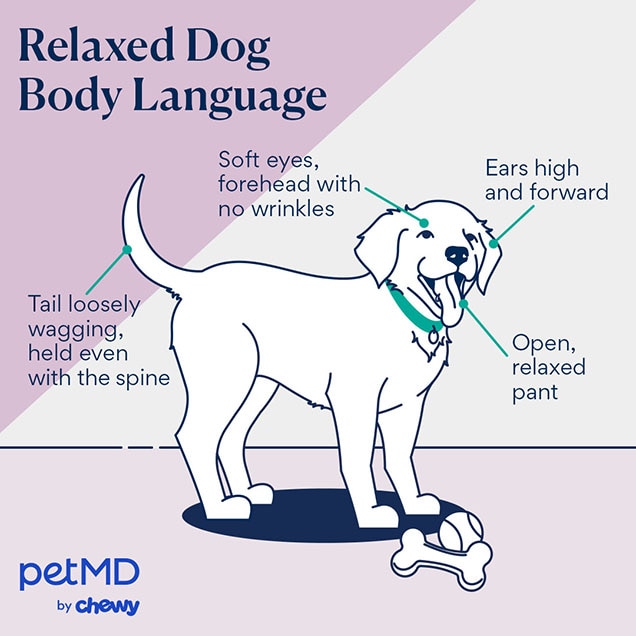
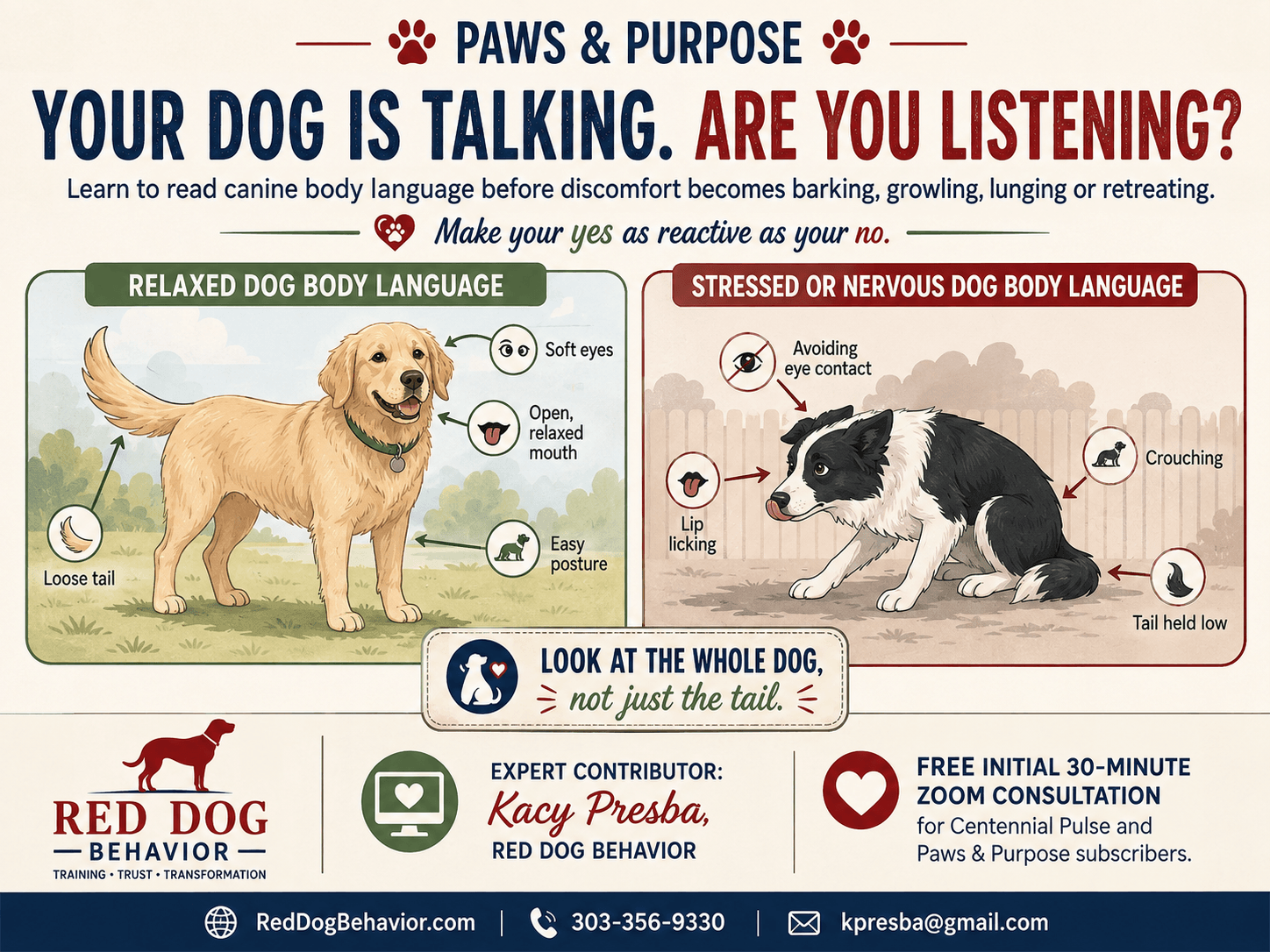
A comfortable dog may have:
-
A loose, relaxed body
-
Soft eyes
-
Natural ear position
-
Easy, fluid movement
-
A relaxed mouth
-
A broad, loose tail movement
-
Willingness to approach, engage or remain nearby
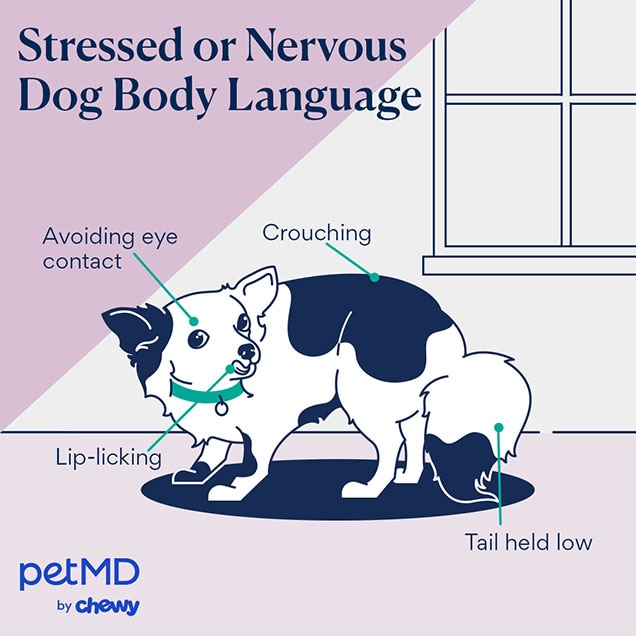
A dog beginning to feel uncertain or uncomfortable may:
-
Turn their head away
-
Avoid eye contact
-
Lick their lips when food is not present
-
Yawn when they are not tired
-
Become suddenly still
-
Lower their body
-
Tuck or change the position of their tail
-
Show the whites of their eyes, sometimes called “whale eye”
-
Move away or repeatedly attempt to disengage
None of these signals exists in isolation. Context matters, breed characteristics matter and, most importantly, your individual dog matters.
Moving Away Is an Answer
Here is one beautifully simple force-free principle:
If your dog moves away, let them.
We humans are affectionate creatures. We hug. We reach. We pat heads. We lean over dogs. We invite children to “go say hi.”
But affection is only affectionate when the recipient is comfortable receiving it.
If your dog walks away from a guest, turns their head when someone reaches toward them or retreats to another room, resist the temptation to call them back so they can “get used to it.”
They have communicated.
Listening builds trust.
You can always create another opportunity for a positive interaction later, ideally one in which your dog has more choice.
Please Don't Punish the Growl
A growl can make people understandably nervous, particularly around children or unfamiliar visitors.
But a growl contains valuable information.
A growl is not a bite. It is communication. When a dog chooses to use a verbal warning, we should be grateful for the information, especially if we have missed the quieter physical signals that came first. A growl gives us an opportunity to listen, create space and respond before the dog feels the need to escalate further.
It tells us the dog is uncomfortable enough to ask for distance. Punishing that warning may suppress the sound without changing the emotion underneath it.
Instead of correcting the growl, change the situation.
Create distance. Remove the trigger if possible. Give the dog a safe place. Then consider what happened immediately before the growl.
For recurring fear, reactivity or aggressive behavior, professional guidance is appropriate rather than experimenting with increasingly intense corrections.
That philosophy is consistent with current guidance from the American Veterinary Society of Animal Behavior, which recommends reward-based methods for dog training and behavior modification rather than aversive approaches.
And Don't Forget to Notice the GOOD Communication
Reading body language is not only about spotting stress.
Remember our ongoing Paws & Purpose challenge:
Make your “yes” as reactive as your “no.”
Your dog sees another dog across the street, then looks back at you?
Yes.
A visitor enters and your dog chooses to stay calmly on their bed?
Yes.
Your dog encounters something uncertain, pauses and checks in with you rather than rushing toward it?
Yes.
Your dog walks away from an interaction instead of escalating it?
That can be a very good decision, too.
Yes.
When we begin watching closely enough to recognize those choices, training changes.
We stop waiting for something to go wrong.
We start having a conversation.
Try This: Five Minutes Without Giving a Cue
Sometime this week, spend five minutes simply watching your dog.
Do not ask for a sit.
Do not call their name.
Do not correct anything.
Just observe.
What happens to their ears when something catches their attention?
What does their body look like when they are completely relaxed?
How do they ask you for something?
What do they do when they want interaction?
What do they do when they have had enough?
You are learning your dog's vocabulary.
And the better we become at hearing the quiet communication, the less often our dogs need to turn up the volume.
Ask Kacy
Kacy Presba | Red Dog Behavior
With well over 20 years of experience, Kacy specializes in force-free, relationship-based training, including basic obedience, behavior modification, fear and aggression concerns, owner-trained service dogs, Canine Good Citizen evaluations and Public Access
Test readiness. Her approach centers on trust, wellness, respect and mutual understanding. (Red Dog Training)
🐾 Complimentary Subscriber Consultation
All Centennial Pulse and Paws & Purpose subscribers receive a FREE initial 30-minute Zoom consultation with Kacy.
Simply mention Centennial Pulse or Paws & Purpose when reaching out.
Website: Red Dog Behavior
Call/Text: 303-356-9330
Email: kpresba@gmail.com (Red Dog Training)

28 Comments
Join the conversation
Thanks for explaining about growls. I used to think they were bad but now I get they’re just warnings. Feel better educated!
Nice article but I’d like examples of situations where it can get difficult. What do you do if your dog moves away every time family visits?
I really like the breakdown of relaxed vs. Stressed body signals. Would love a fridge magnet with that checklist!
Glad you found the checklist helpful! A magnet is a fun idea, we’ll keep that in mind for future resources.
Our last trainer used aversive methods and it honestly made things worse. If you’re on the fence, try the gentle approach. It works.
What struck me most is that moving away is communication too. I always took it personally if my dog walked away. Now I know it’s just their way of saying enough.
Big fan of the ‘yes as reactive as your no’ idea. I forget to praise calm behavior as much as corrections. It makes sense to reward the good moments.
Enjoyed how the article pointed out breed matters. My husky is all about body language, but my pug’s signs are so much more subtle!
Pat MGeeSame here! My corgi is super expressive with her whole body, but my chihuahua barely shows anything. It's a learning curve with each one, for sure.
Not sure I totally agree. Sometimes dogs do need to be nudged out of their shell, right? My dog hid from everyone at first, and gentle encouragement helped.
That’s a thoughtful point, in some cases, gentle encouragement and giving a dog choice can help them build confidence, but always at their own pace and comfort level.
Honestly, I wish all trainers had this mindset. Too many people still think dogs have to obey no matter what. Glad to see science-based advice getting out there.
Doing the five minute watch-your-dog thing this afternoon. I never realized how much I talk to her or ask for sits. Excited to just observe.
That's great to hear! Observing without cues can reveal so much about your dog’s natural communication, enjoy the experiment!
I appreciate Kacy saying not to punish growls. We always thanked our dog for warning us. It’s better than just snapping for no reason.
Thank you for sharing your perspective, acknowledging and appreciating a growl as communication truly helps keep everyone safer and strengthens trust.
My kids always want to rush up and hug our lab. I’ll be teaching them about lip licking and whale eye now. Thank you for the clear list!
Who else is guilty of patting their dog on the head too much? This is a good reminder to let them come to us.
I keep missing those softer signals. My Beagle yawns a lot and I thought he was just tired! Definitely gave me something to think about.
Love the force-free approach. We switched a few years ago and it changed our relationship with Rocky for the better. Trust is everything.
We love hearing success stories like yours, force-free methods truly can transform the relationship and build lasting trust, so thank you for sharing Rocky’s journey.
I’ll be honest, I always got nervous when my dog growled. But the tip to create distance instead of punishing is something I’ll try next time.
Thank you for being open to a new approach. Creating space not only de-escalates the situation but also shows your dog you’re listening to their needs.
The advice about not forcing dogs to interact with guests really resonates. Our last trainer had us keep bringing Chester back into the room. Maybe that wasn’t fair to him.
Thank you for sharing your experience, allowing dogs to choose their level of interaction really does help build their confidence and sense of safety.
I had no idea a wagging tail didn’t always mean a happy dog. Makes me want to rewatch my pup more closely when he’s around new people.
This is so helpful! My dog always licks his lips when guests come over and I never realized it could mean he’s uncomfortable. Trying to pay more attention now.
Thank you for noticing those subtle cues. Lip licking in the absence of food can definitely signal uncertainty, so your awareness is a big step toward helping your dog feel more at ease.